Research

We investigate dynamic neural representations of episodic memory, individual differences in memory and emotion regulation, and causal memory modulation through brain-computer interfaces.

Core Research Directions

Dynamic Neural Representations of Episodic Memory

Dynamic Neural Representations of Episodic Memory

We combine multi-modal neuroimaging (iEEG, EEG/MEG, fMRI) and deep neural network (DNN) models to investigate how sensory experiences transform into enduring memories. Our research tracks information processing across all memory stages, including encoding, maintenance, consolidation, and retrieval, at both behavioral and neural levels.
Individual Differences in Memory and Emotion Regulation

Individual Differences in Memory and Emotion Regulation

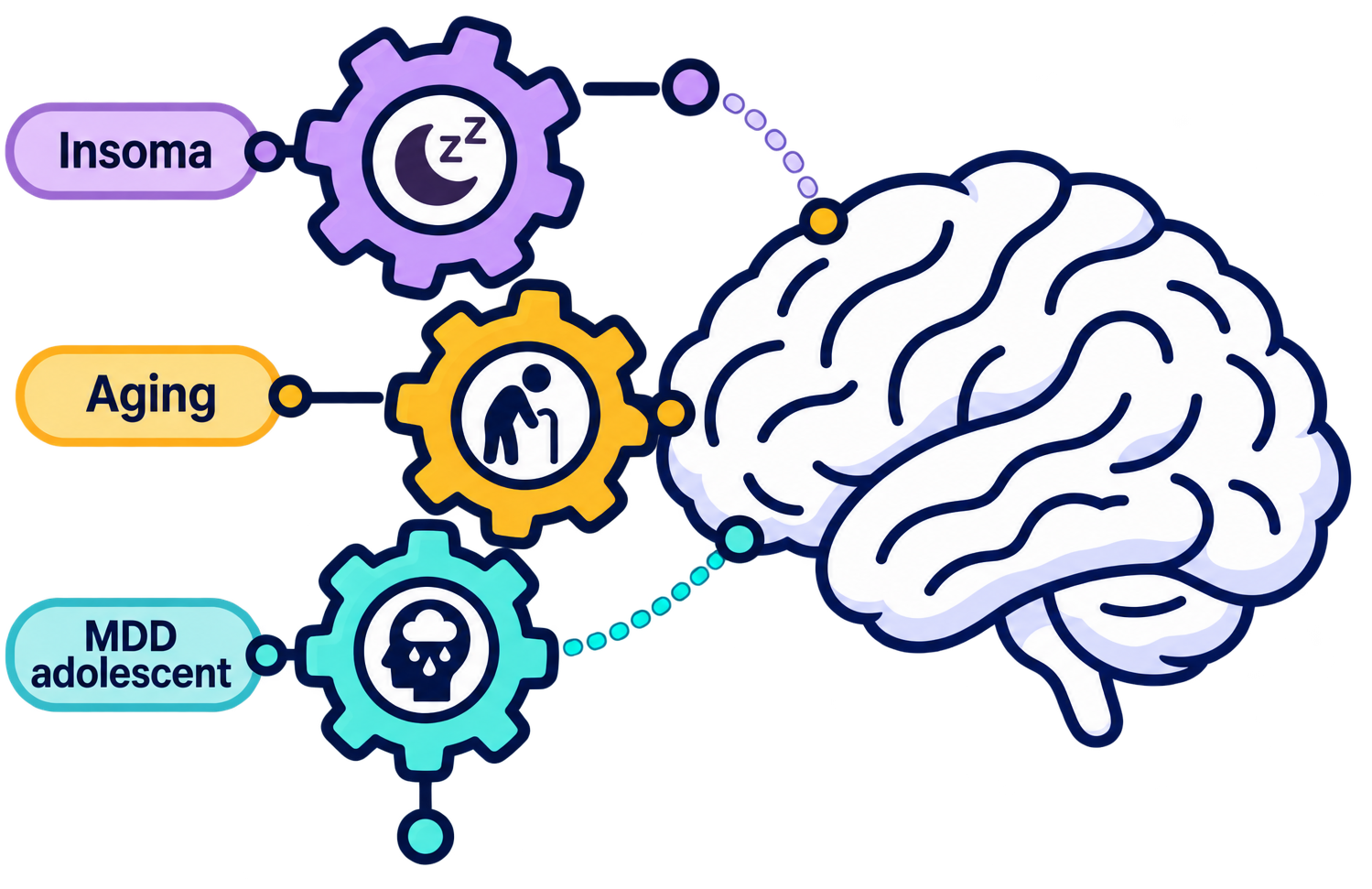
We examine individual differences in memory and emotion regulation across distinct populations, including individuals with insomnia, older adults, and adolescents with depression. By identifying population-specific vulnerabilities, we develop targeted approaches to modulate and enhance emotional and memory functions in these groups.

Memory Modulation and Brain-Computer Interfaces

Memory Modulation and Brain-Computer Interfaces (BCI)

We integrate advanced brain stimulation techniques, including invasive intracranial electrical stimulation (iES), temporal interference (TI), transcranial ultrasound stimulation (TUS), high-resolution tDCS/tACS, and sleep-based auditory stimulation, with brain-computer interfaces to investigate causal memory modulation and build personalized, closed-loop systems for sleep and memory optimization.